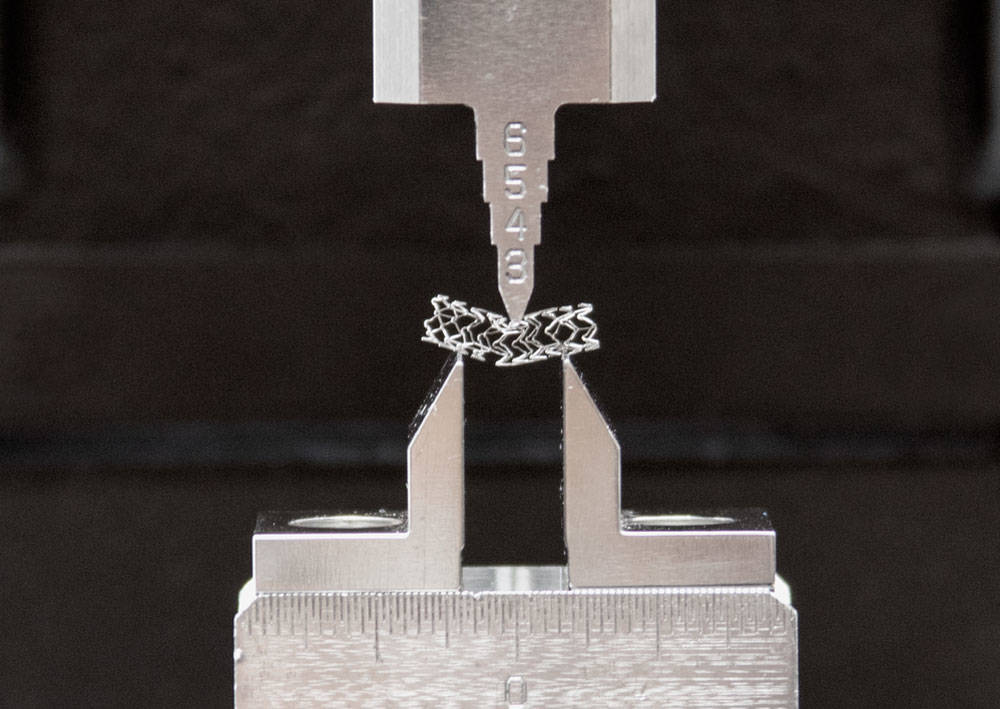
Evaluation of Radial Forces from Embolic Filters

Biomedical Testing » Implantable Devices

Evaluation of Radial Forces from Embolic Filters

Radial Strength Testing of Stent Grafts and Vascular Devices

Embolic filters are used within a variety of interventional procedures to capture debris resulting from the deployment of a medical device, like a stent. The stent is used to open arterial paths that may be occluded by plaque. Upon placement of the stent, dislodged plaque (or embolic material) can potentially be responsible for heart attacks, strokes, kidney failure, or death. Firm placement of the embolic filter is a critical requirement for successful procedures.

One of the most critical parameters for proper utilization of the filter is the radial forces it imparts on the arterial wall. In particular, the chronic radial force that the filter imparts over time helps to ensure that the device remains in place as intended. This fit ensures that all material is captured before heading further down the arterial pathways.

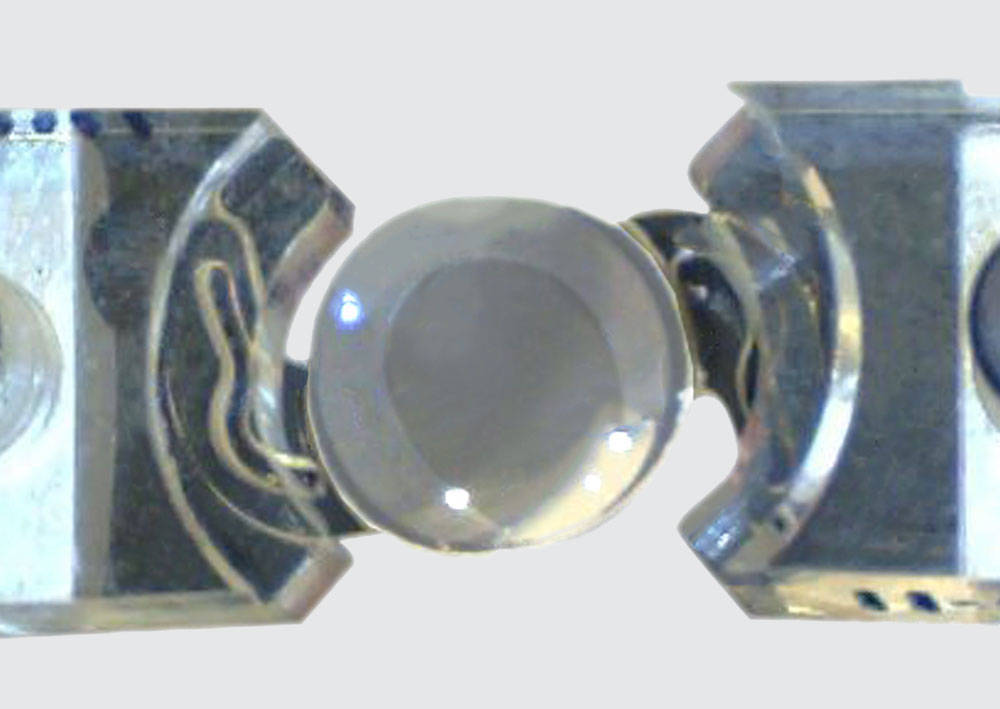
The RX575 system has the fidelity to measure the small radial expansion forces of the embolic filter. The unique segment design of the fixture results in small frictional forces, which ensures that your data will present clean results from the radial tests. The radial fixture mounts to electromechanical instruments, as well as into a fluid bath for accurate simulation of body temperatures. Additionally, the fixture provides the capability for tensile tests to evaluate resistance to tearing properties during deployment.

Bluehill® Software provides an interface to run tests, to evaluate the radial strength, and to generate standard reports that can be submitted for regulatory submissions.

Literature

3400 Series Universal Testing Systems Brochure

Instron 3400 Series universal testing systems for tensile, compression, bend, and other material property tests.

  • 製品
  • 06/27/2022
  • 2.69 MB

6800 Series Premier Testing Systems Brochure

Instron 6800 Series Universal Testing Systems provide unparalleled accuracy and reliability. Built on a patent-pending Operator Protect system architecture with an all-new Smart-Close Air Kit and Collision Mitigation features, the 6800 Series makes materials testing simpler, smarter, and safer than ever before.

  • 製品
  • 02/10/2020
  • 4.15 MB

Radial Force Evaluation of Stent Grafts

Biomedical Testing » Implantable Devices

Radial Force Evaluation of Stent Grafts

Stent grafts are used to treat a wide variety of peripheral arterial issues, as well as abdominal and aortic pathologic conditions like abdominal aortic aneurysms (AAA). The success of endovascular stent grafts for AAA’s has provided motivation to adapt similar technology for descending thoracic aortic aneurysms (TAA’s). Survival rates for untreated and traditionally treated (through complex thoracic surgeries) aneurysms are typically quite poor.

Advantages of stent grafts include shorter operative time, avoidance of major thoracic or thoracoabdominal incisions, and significant reductions in morbidity and mortality. Successful surgery requires the accurate placement of the stent graft to ensure it does not move, especially in upper descending thoracic aorta cases.

Typically, secure placement for stent grafts is a function of the proper selection and sizing since physiological movements of the aorta can be significant. Additionally, stent grafts have much larger diameters than coronary stents (30+ mm versus 2-3 mm). Evaluating the radial strength of a stent graft helps manufacturers to ensure efficacy and reliability of the medical device when implanted in vivo.

Instron partners with Machine Solutions Inc. (MSI) to utilize either a RX575 or RX675 stent iris on an Instron system. The fixture can also be customized and used for special specimen types to provide radial strength and stiffness over the entire graft or the securing graft ends. The control software to operate MSI’s RX fixture on an Instron system is standard Bluehill® 3 and TestProfiler. Although room-temperature testing provides excellent comparative results, the system can also be configured with a chamber to provide simulation of body temperature.

Literature

6800 Series Premier Testing Systems Brochure

Instron 6800 Series Universal Testing Systems provide unparalleled accuracy and reliability. Built on a patent-pending Operator Protect system architecture with an all-new Smart-Close Air Kit and Collision Mitigation features, the 6800 Series makes materials testing simpler, smarter, and safer than ever before.

  • 製品
  • 02/10/2020
  • 4.15 MB

コンタクトレンズ試験

Biomedical Testing » Implantable Devices

コンタクトレンズ試験

課題

コンタクトレンズ

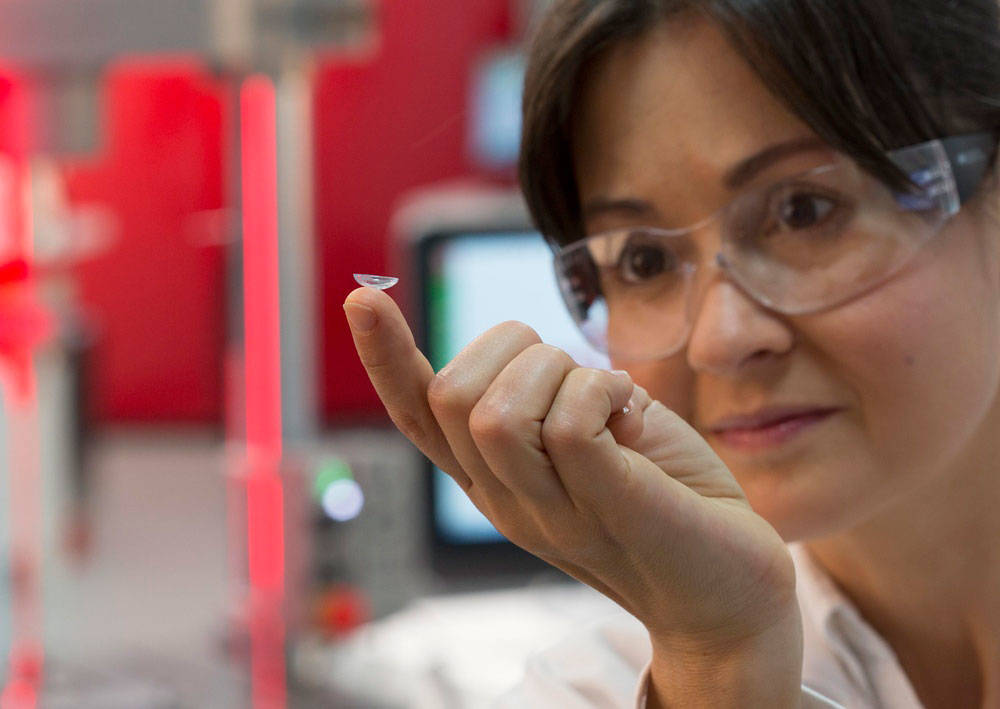
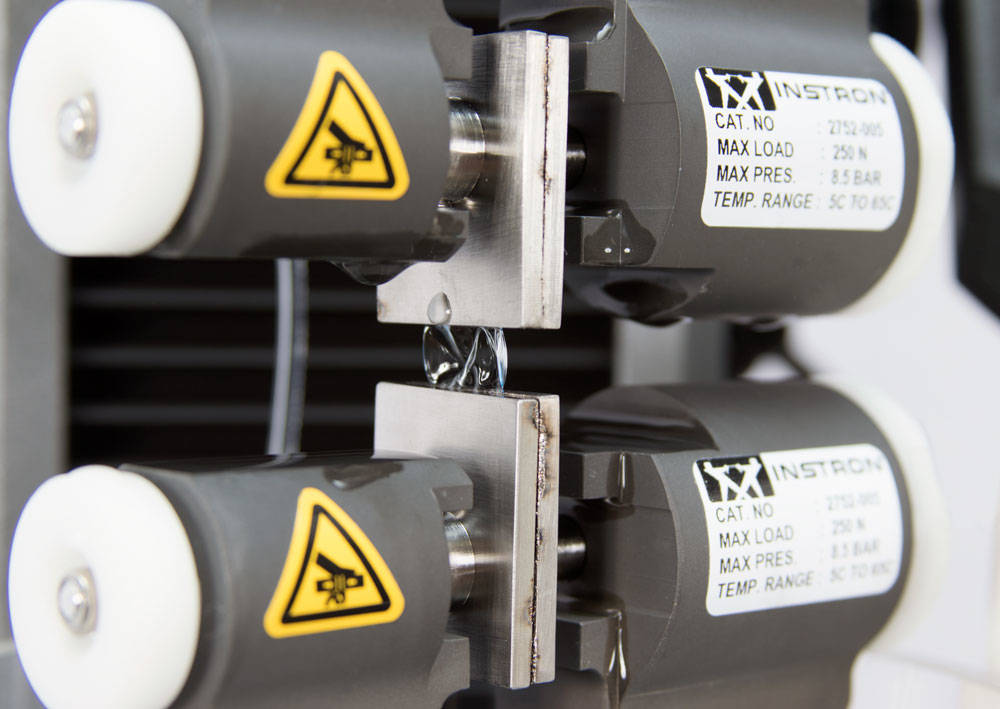
世界で最も広く使用されている医療機器の一つであるコンタクトレンズは、主に視力矯正に使用されますが、美容目的の強化や修正にも使用されます。さまざまな形態で製造されていますが、最も一般的なのはソフトポリマー素材です。ソフトコンタクトレンズの素材は滑りやすく、取り扱いが繊細であるため、試験片をグリップに装着するのが難しく、非常に低い荷重下でもレンズが破れることがよくあります。実際の使用状況を最適にシミュレートするため、コンタクトレンズは生理学的に関連のある条件下で試験する必要があります。これには、体温まで加熱された生理食塩水槽内での試験が求められます。

当社のソリューション

コンタクトレンズ試験

コンタクトレンズの試験には、万能材料試験機にBioBath 250 N水中用空気圧引張グリップと極長サーファロイ・グリップフェイスを構成して使用することをお勧めします。長いグリップフェイスにより、ユーザーは小さなレンズを操作するのに十分なスペースを確保しながらグリップに挿入でき、同時にグリップ間隔をゼロに設定することも可能になります。レンズは、最終製品そのものとして、あるいはストリップ状にカットしたり、トラウザー引裂試験を行うために切り込みを入れたりして試験することができます。また、試験片の破断を正確に検出するために、低容量ロードセルの使用も推奨されます。250 N水中用空気圧グリップと、ロードセルに取り付ける関連プルロッドは、コンタクトレンズ試験のような低荷重試験中の浮力の影響を最小限に抑えるように設計されています。

眼内インプラントの試験

Biomedical Testing » Implantable Devices

眼内インプラントの試験

課題

眼内インプラント

眼内レンズ(IOL)は、患者の眼内に挿入される合成人工レンズであり、最も一般的には白内障手術後に使用されます。疾患により患者の自然な水晶体が除去されると、眼の再焦点能力が失われます。IOLは、ポリメタクリル酸メチル(PMMA)、シリコーン、アクリル、およびその他の柔軟な素材から製造されることが最も一般的であり、これらの素材により容易に折り畳んで眼内に挿入することが可能です。手術中、IOLが破れたり裂けたりしないことが極めて重要です。わずかな裂け目でも患者にとって非常に不快になる可能性があるためです。IOL試験における最大の課題には、手術中に経験する折り畳み挙動のシミュレーション、およびこれらの小型で硬貨サイズのデバイスの把持があります。

当社のソリューション

眼内インプラントの試験

IOLの試験には、TestProfilerモジュールを使用して、IOLを引張と圧縮の両方にかける簡単な繰り返し試験を実施することを推奨します。試験システムには、6800シリーズ万能試験機、ファイバーグリップ、および10 Nロードセルなどの低荷重ロードセルの使用を推奨します。さらに、Bluehill® UniversalのTestCam機能とUSBマイクロスコープの組み合わせを推奨します。これにより、ユーザーは試験片を拡大し、試験を記録し、試験後に映像を再生することができます。少なくとも10倍のUSBマイクロスコープを使用することで、肉眼では見えない可能性のある小さな裂け目を検出することができます。

心臓ペースメーカーの試験

Biomedical Testing » Implantable Devices

心臓ペースメーカーの試験

課題

心臓ペースメーカー

ペースメーカーは、患者の鎖骨下に植え込まれる小型の電子機器で、心拍をより規則的にするのに役立ちます。主に3つの部品(パルスジェネレータ、1本以上のリード、各リード先端の電極)で構成されます。パルスジェネレータは、回路、バッテリー、心臓へ送る電気インパルスを制御するコンピュータチップを収めた小型ケースで構成されています。リードは、パルスジェネレータに接続された絶縁ワイヤで、心臓のいずれかの心腔まで伸びています。リード先端の電極は心壁に接触し、患者の心臓へ電気インパルスを伝達する役割を担います。ペースメーカーの各部品はいずれも機能にとって重要であるため、3つすべての部品に対して厳格な試験が必要です。マイクロ電子部品のせん断試験、バッテリーの圧縮試験、リードの引張試験など、多様な試験を1台のシステムだけで満たすことは困難な場合があります。

当社のソリューション

心臓ペースメーカーの試験

Instron® 6800シリーズ試験システムは、Bluehill® UniversalソフトウェアおよびTestProfilerモジュールと組み合わせることで、現在市場で最も高性能な万能試験機の一つです。ソフトウェアの柔軟性により、引張、曲げ、圧縮、はく離、引裂、摩擦など、多様な試験方法を簡便にプログラムできます。さらに、InstronのEngineered Solutions Groupは、複数のエレクトロニクス企業および医療機器企業と提携し、特殊なせん断クランプやマイクロ曲げ治具などの専用治具を開発してきました。また、リードの引張試験には空圧式コード/ヤーングリップの使用を推奨します。

ステント試験

Biomedical Testing » Implantable Devices

ステント試験

課題

ステント

ステントの機械的試験には、静的試験と疲労試験の両方を含む様々な試験が含まれます。ステントは最も一般的にニチノールワイヤから製造されており、ASTM F2516に従った単純な繰り返し試験を実施する必要があります。ステントに対して頻繁に実施されるもう一つの静的試験は、ASTM F2606に準拠した曲げ試験です。原材料の試験に加えて、ステント本体のダイヤモンド構造は、位置制御下で60 Hzの疲労試験が一般的に実施されます。ステント本体全体も、静的試験としての径方向圧縮試験、および動的試験としての拍動疲労試験または繰り返し疲労試験が通常実施されます。単一のステントに対してこのように多様な機械的試験が必要とされることを考慮すると、可能な限り多くの試験を実施するための適切な試験システムを選択することは、しばしば困難な課題となります。

当社のソリューション

ステント試験

ASTM F2516、ASTM F2606への準拠試験、およびステント本体全体の径方向圧縮試験を含むすべての静的試験には、6800シリーズ万能試験機の使用を推奨します。ASTM F2516に従ってニチノールワイヤを試験する際には、正確なひずみ測定のためにAdvanced Video Extensometerの使用を推奨します。ステント本体全体の径方向圧縮試験を実施する際、Instron®はMachine Solutions Inc.(MSI)と提携し、専用治具を提供しています。径方向圧縮治具は、あらゆるInstron 68TM試験システムに取り付けることができ、標準のBluehill® Universalソフトウェアを使用して試験を制御することができます。

ステント本体のダイヤモンド構造の試験や、繰り返し伸長制御下でのステント全体の試験を含むすべての疲労試験には、ElectroPuls®試験システムの使用を推奨します。